PROTECT ALL
Shrink Wrapping Services
Does shrink wrapping need a hot work permit? What Ontario sites need to know
Usually, yes. Heating film with a propane tool is an open flame next to combustible material, and on most Ontario industrial sites that puts shrink wrapping in the hot work category — a signed permit, a cleared area, a fire watch and extinguishers within reach.
It catches people off guard, because wrapping doesn't feel like welding. Here's what it means for your job, and how to keep it from costing you a date.
Is shrink wrapping actually classified as hot work?
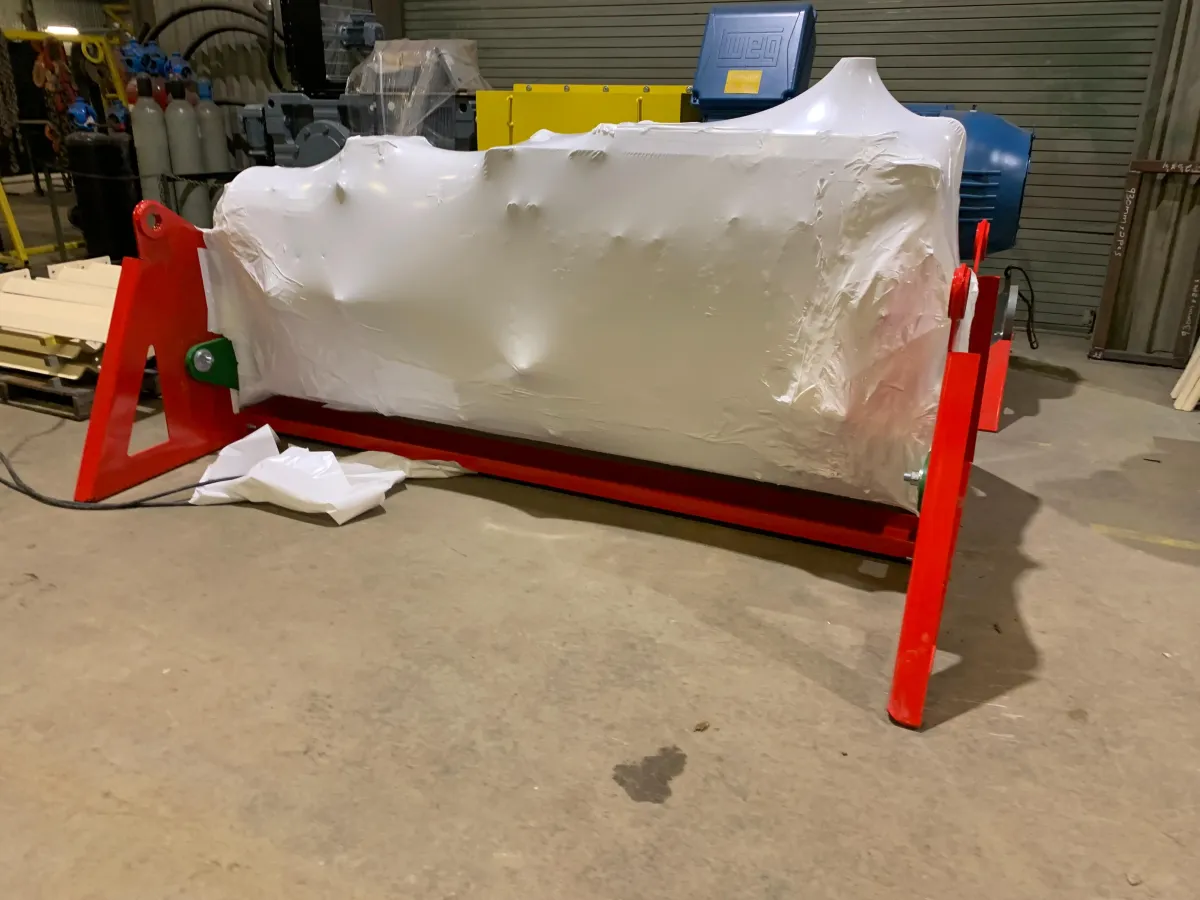
On most industrial sites, yes — and it's the tool that decides it, not the film. Industrial shrink wrap goes on with a propane heat gun, and open flame near combustible material is the definition every site safety program works from. Carleton University's fire protection policy makes it explicit, listing "sealing plastic shrink-wrap by torch" alongside cutting, welding, brazing, grinding and thermal spraying.
Worth correcting before someone quotes it at you: the Ontario Fire Code is O. Reg. 213/07. The older O. Reg. 388/97 was revoked in November 2007 but still circulates, including in policies nobody has updated since.
When it isn't
Not every install uses flame. Electric hot-air tools exist, and there are tensioning-and-gluing methods with no heat at all. On sites with a blanket no-open-flame rule — refineries, some food plants, live process areas — that's usually the only route. Slower and dearer, but it changes the permit conversation entirely.
What a hot work permit actually requires
There's no national hot work permit form. It's a control system, and the specifics come out of your own site's safety program — which is why one plant issues same-day and another wants ten business days for the same job. These elements show up on nearly every permit we've worked under.
What a permit typically requires on an Ontario site
| Requirement | Typical standard | Notes |
|---|---|---|
| Written permit | Signed before work starts, valid for a defined area and period | Issued by your site, not a regulator. Lead times vary widely |
| Clearance radius | Combustibles removed or protected within roughly 10.7 m (35 ft) | Federal permit practice, not the Ontario Fire Code |
| Fire watch | During the work and for one hour after | Per CSA W117.2. CCOHS notes some areas need 3+ hours |
| Extinguishers | On hand and rated for the hazard | Sized to the area and the materials present |
| Film selection | Flame-retardant where people work under it | NFPA 701 rated; available in 7, 9 and 12 mil |
| Fire system | Alarm or sprinkler isolation coordinated with facilities | The step most often forgotten |
| Close-out | Permit and checklists signed and returned | Checklist displayed in the work area throughout |
The fire watch
CSA W117.2 — the Canadian standard for welding, cutting and allied processes — calls for a trained watch during the work and one hour after. CCOHS notes higher-hazard areas can warrant three or more. If you've seen 30 minutes quoted, that's a US figure.
Fire system isolation — the step that gets missed
If heat or smoke could reach a detector, the zone gets isolated with facilities before we start and restored when we're done. Skip it and a wrapping job empties the building.
Planning a job that will need a permit? We'll confirm what your site's process requires before we schedule.
Which Ontario rules actually apply
Three instruments matter on an Ontario industrial site:
- The Occupational Health and Safety Act and R.R.O. 1990, Reg. 851 — s. 78 for drums, tanks, pipelines and containers, s. 25(2)(h) for the general duty to take every reasonable precaution.
- The Ontario Fire Code, O. Reg. 213/07, s. 5.17 — welding and cutting, which defers to CSA W117.2.
- CSA W117.2, where the practical fire watch duration comes from.
The nuance that matters for planning: the Fire Code doesn't require a written hot work permit at all. The permit is your site's own construct — which is exactly why requirements swing so hard from plant to plant. You'll also see OSHA cited on this; OSHA is American and has no jurisdiction here.
Flame-retardant film: when you actually need it
Standard polyethylene shrink film is combustible. Flame-retardant film self-extinguishes shortly after the ignition source is gone, is certified to NFPA 701, and comes in 7, 9 and 12 mil.
The rule we work to: if people will be under or inside the wrap, or hot work is happening near it, use flame-retardant film. Outdoor storage or transport with nobody underneath — standard film is normally fine.
One caveat: NFPA 701 is a US test standard, and FR film doesn't discharge your permit or fire watch obligations. It covers the material, not the process.
What to require from a contractor before they light a torch
Hand this to procurement. Every item is something a competent contractor can produce the same day you ask.
- A current WSIB clearance certificateUnder s. 141 of the Workplace Safety and Insurance Act, hire a contractor without valid clearance and you can be on the hook for their unpaid premiums. Valid up to 90 days.
- A certificate of insuranceCommercial general liability naming your organisation as additional insured. Two to five million is the usual range.
- Hot work permit experienceThey can work inside your permit system and supply a trained fire watch.
- WHMIS 2015 trainingFor anyone handling propane and film.
- Working at Heights certificationCPO-approved under O. Reg. 297/13, valid three years, portable between employers. Expired means untrained.
We carry all five. Ask and the paperwork comes with the quote, before anyone is scheduled.
Planning around the permit
Lead times run from same-day to ten full business days. A truck booked for Thursday against a permit that takes a week is the most common reason an urgent wrapping job doesn't happen. In seventeen years, what kills a date is almost never the wrap — it's paperwork nobody started. Three things save it:
- Raise the permit at scoping
Not when the truck is booked. Costs nothing at quote stage, and it's the single biggest cause of missed dates.
- Ask if there's a designated hot work area
Some sites keep a permanent one that skips the per-job permit entirely. Worth asking before you assume.
- Confirm open flame is allowed at all
If it isn't, a no-flame method has to be planned in from the start. It changes the timeline and the price.
Train your own crew to wrap
If permits are a recurring conversation at your site, it's usually cheaper to have your own people trained to handle the routine work.
- One day on site, 3–6 people, your own dock or yard
- All five attachment methods, propane tool handling, ventilation and on-site safety
- Starter kit supplied, plus equipment recommendations beforehand
- Free phone support for the first month of real jobs
Frequently asked questions
Is shrink wrap flammable?
Standard polyethylene shrink film is combustible. Flame-retardant film certified to NFPA 701 self-extinguishes shortly after the ignition source is removed, and is the right choice wherever people work under the material or hot work happens nearby.
What is the 35 foot rule for hot work?
Clearing combustible material from a radius of roughly 35 feet (about 10.7 metres) around the work area, or covering what can't be moved with fire-resistant blankets. The figure comes from Canadian federal hot work permit practice, not the Ontario Fire Code.
What are the requirements for a hot work permit?
A signed permit valid for a defined area and period, a cleared work zone, a trained fire watch during and after the work, extinguishers on hand, fire system isolation where relevant, and a signed close-out. Each site sets its own specifics.
How long does a fire watch have to be maintained?
CSA W117.2, the standard Ontario's Fire Code defers to, calls for a fire watch during the work and one hour after. CCOHS notes higher-hazard areas may warrant three or more hours. The commonly cited 30 minutes is a US standard.
What are three types of hot work areas?
Designated (permanently set up for hot work, no per-job permit), permit-required (allowed once a permit is issued and controls are in place), and prohibited (never, typically live process or high-hazard areas).
What is the maximum time for a hot work permit?
Most commonly a single shift or a single day, re-issued rather than extended. The window is set by the site's own program, so confirm it when you request the permit.
What temperature is needed for shrink wrap?
Industrial shrink film is activated with a propane or electric heat tool applied in passes, never held in one place, and shrinks roughly 25 to 30 percent as it heats. Exact ranges vary by grade and are on the manufacturer's data sheet.
Sources used in this article
- Carleton University — Hot Work, fire protection policy
- Ontario Fire Code, O. Reg. 213/07, section 5.17
- R.R.O. 1990, Reg. 851 (Industrial Establishments) under the Occupational Health and Safety Act, s. 78
- CSA W117.2, Safety in welding, cutting and allied processes
- Canadian Centre for Occupational Health and Safety — Welding, hot work
- Workplace Safety and Insurance Act, 1997, s. 141
- O. Reg. 297/13 — Working at Heights training
- NFPA 701 — Standard Methods of Fire Tests for Flame Propagation of Textiles and Films
On-site wrapping across Ontario
Industrial machinery & equipment
On-site protection for machinery, tooling and high-value equipment.
See details →Freight & cargo protection
Flatbed loads and oversized freight wrapped before transit.
See details →Construction containment
Sealed enclosures for containment, weather protection and temporary work areas.
See details →Outdoor storage protection
Equipment and assets sealed for laydown yards and seasonal storage.
See details →Vehicles & marine
Boats, vehicles and seasonal assets wrapped for storage or transport.
See details →On-site shrink wrap training
One day, 3–6 people, your own dock. Starter kit included.
See details →Protect All Shrink Wrapping Services — mobile, on-site industrial shrink wrapping across Ontario, based in Kingston, 17+ years in the trade.
Planning a job that needs a permit?
Tell us what needs wrapping and where. We'll confirm what your site's permit process requires before we schedule, and send the WSIB and insurance paperwork with the quote.

© Copyright 2026. Kingston, Canada. All rights reserved.